
— Hair Loss & Restoration
Pattern hair loss is biological. So is the response.
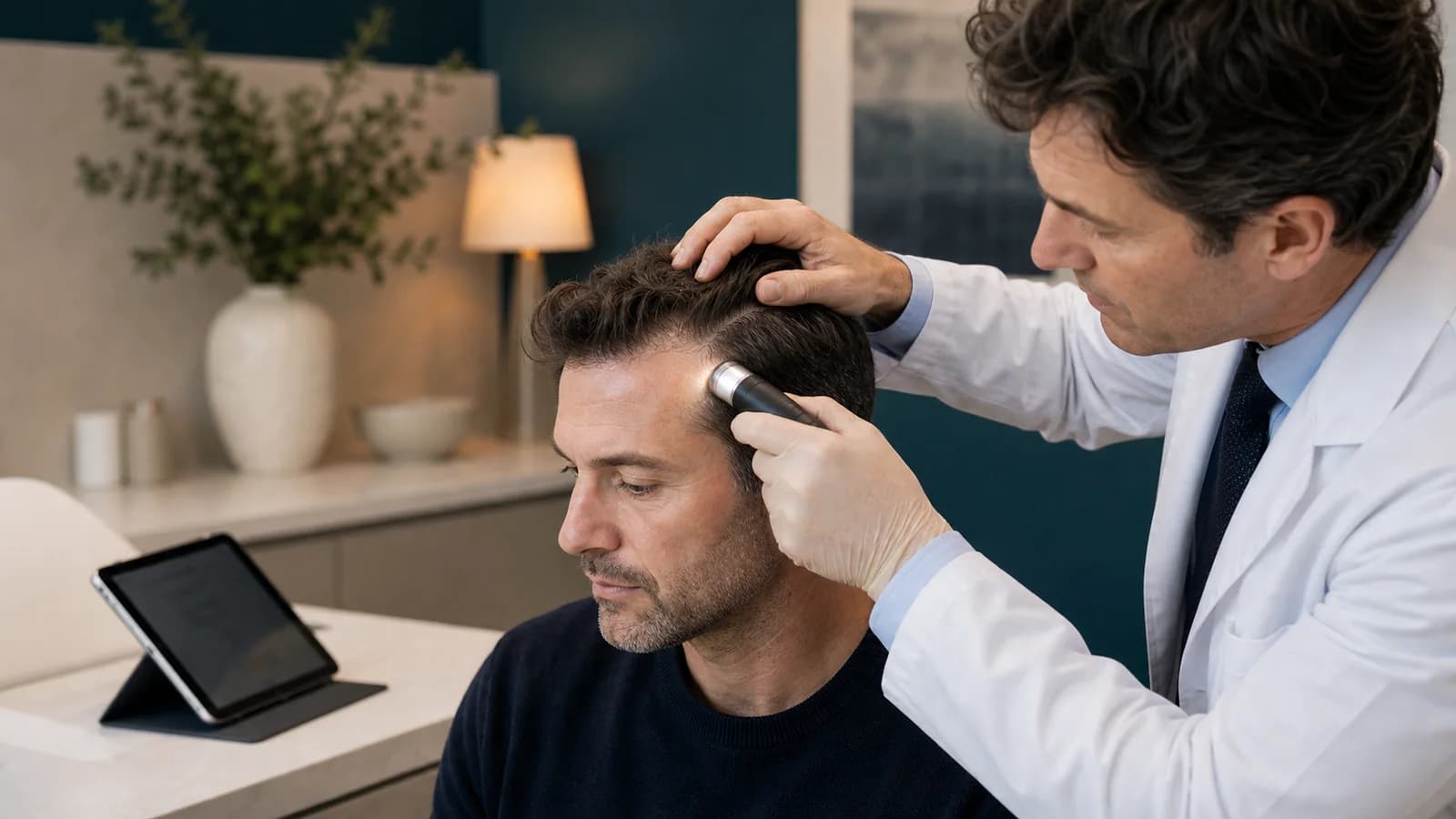
What is hair loss (androgenetic alopecia)?
Androgenetic alopecia — commonly called male- or female-pattern hair loss — is the most common form of hair loss. It is a genetic, progressive condition in which hair follicles gradually shrink (a process called miniaturization), producing finer, shorter hairs until some follicles stop producing visible hair altogether.
In men it typically shows as a receding hairline and thinning at the crown; in women it more often appears as diffuse thinning across the top of the scalp, usually preserving the frontal hairline. The condition is influenced by genetics and by androgens, particularly the hormone dihydrotestosterone (DHT), which sensitive follicles react to over time.
Because it is progressive, earlier treatment is generally more effective — therapy is far better at preserving and reinforcing existing follicles than at reviving ones that have been dormant for years. That is why an early, accurate evaluation matters.
— Symptoms
Signs to watch for.
- A gradually receding hairline, often beginning at the temples (in men)
- Thinning or widening of the part across the top of the scalp (in women)
- Hair at the crown becoming progressively finer and sparser
- A noticeable reduction in overall hair density and volume
- Hairs growing back thinner and shorter than before
- A more visible scalp under bright light
- Slow, painless progression over months to years
— Causes
What's behind it.
- A genetic predisposition inherited from either side of the family
- Sensitivity of hair follicles to dihydrotestosterone (DHT)
- Hormonal changes, including those of menopause or androgen excess in women
- Aging, which gradually reduces follicle activity
- Contributing factors such as thyroid disorders, iron deficiency, or nutritional gaps
- Stress and certain medical conditions that can accelerate shedding
When to see a physician.
- You notice increased shedding, a receding hairline, or visible thinning
- Hair loss is sudden, patchy, or accompanied by scalp redness, itching, or pain (which may signal a different cause)
- You have other symptoms such as fatigue or menstrual changes that suggest a hormonal or nutritional issue
- You want to act early, while existing follicles can still be preserved
— Common Questions
About hair loss (androgenetic alopecia).
01Can androgenetic alopecia be reversed?
It cannot be cured, but for many people it can be slowed and partly reversed — especially when treated early. Medical and regenerative therapies work best at preserving existing follicles, so acting sooner gives the strongest result.
02Do women get pattern hair loss too?
Yes. Female-pattern hair loss is common and usually appears as diffuse thinning across the top of the scalp. It can be linked to genetics and to hormonal changes such as menopause, which is why we evaluate hormones as part of the work-up.
03Will I definitely need a transplant?
Often, no. Many patients maintain and regrow with medical and regenerative therapy alone. If a transplant truly is the right option for you, we will say so honestly and guide you to it.
04When should I start treatment?
As early as you can. Because the condition is progressive and therapy is more effective on active follicles than dormant ones, the best time to act is when you first notice change.
Begin better.
A consultation costs nothing. The conversation may change everything.
Request your free consultation